
Fence care guides · Products
Fence staining vs. painting: which actually protects longer?
Paint protects houses for a decade. On a fence, it peels in two or three years. The difference isn’t the paint — it’s what a fence does to any film. Here’s the mechanism, the photos, and the 10-year math.
By the Patriot Fence & Stain team · Veteran-owned, 3,000,000+ sq ft stained since 2015 · Updated August 7, 2026 · 6 min read
Veteran-owned
BBB A+ since 2017
3M+ sq ft stained
$0 deposit on staining under $10K
A fence is the worst possible place for a film
Paint works by building a solid film over the surface. On house siding — primed, back-sealed, sheltered by eaves — that film can hold for years. A fence board lives a different life: raw wood, exposed on both faces, every edge and end grain drinking rain, sprinkler spray and soil moisture, then baking in full Oklahoma sun. Moisture is constantly moving through the board, and a film gives it nowhere to go. Vapor pressure lifts the coating from underneath; freeze-thaw opens hairline cracks; UV embrittles the surface. The film cracks, blisters, and peels in sheets.
This is true of paint and of paint’s close cousins — solid stains and other film-forming products. Chemistry doesn’t care what the can is labeled. If it builds a film on a fence, the fence will eventually shed it.
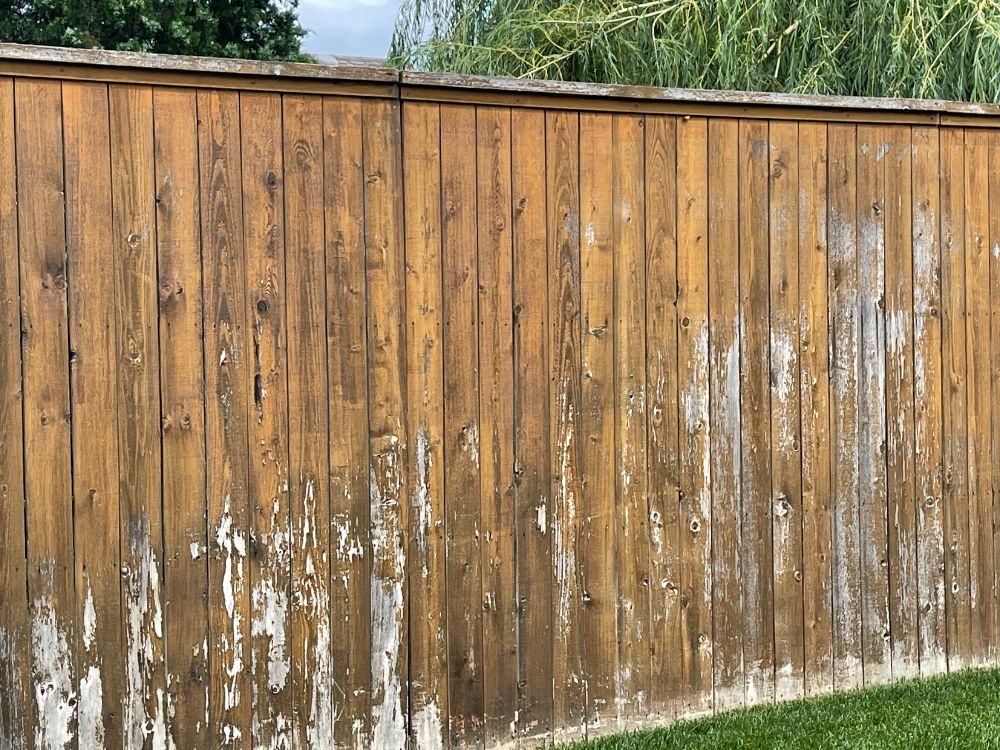
A film-forming coating failing across a whole panel.
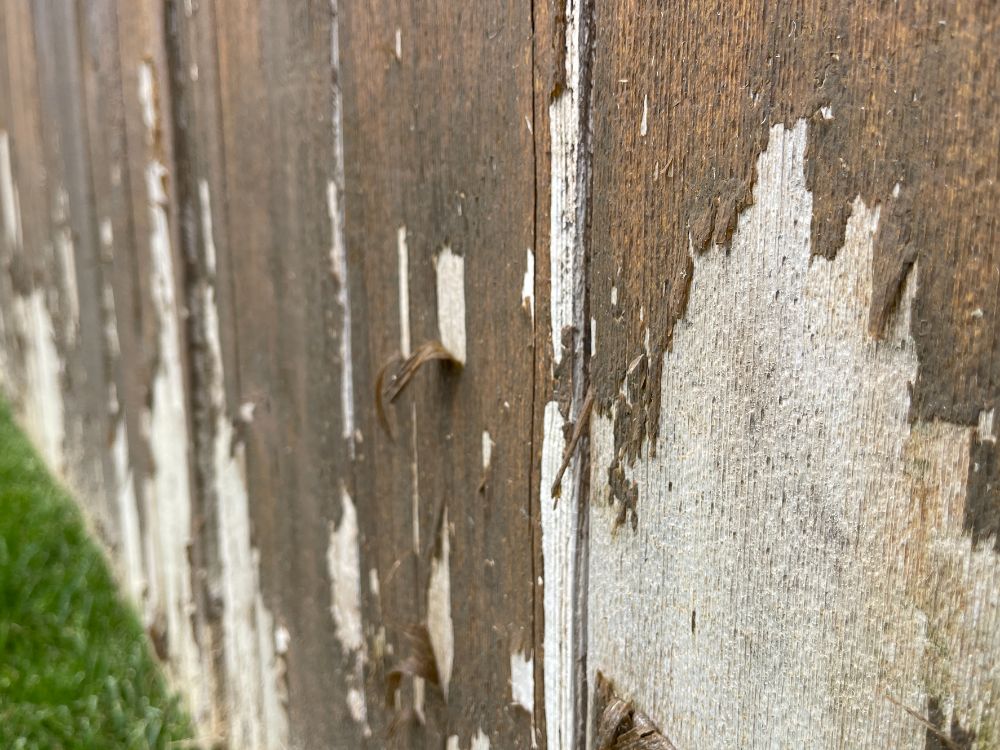
Up close: the film curls off in sheets, not dust.
Penetrating stain has nothing to peel
An oil-based penetrating stain works the opposite way: it soaks into the wood fiber and cures there. Water beads off the surface, but vapor can still escape — the wood breathes instead of trapping moisture. There is no film, so there is nothing to crack, blister or peel. As it ages, it fades gradually and evenly, and the fix is a simple clean-and-recoat. That mechanism is also why we can apply it year-round in Oklahoma — no film to fail in a freeze. The full mechanism comparison lives on our film vs. oil page.
The look: grain vs. plastic
Paint hides everything you paid for when you chose cedar — the grain, the knots, the warmth. Penetrating stain enhances it: transparent and semi-transparent tones let the wood read as wood, in colors from light Natural Cedar through Auburn and Pecan to rich Chocolate. The visual test is simple: if you can see grain through the color, it’s penetrating stain; if it looks like a plastic coating, it’s a film — and it’s on the clock.
The 10-year math
Paint: repaint every 2–3 years, each cycle adding scraping, sanding or stripping of the failed film before new coats. Penetrating oil: recoat every 2–3 years, each cycle just soft-wash and stain. Same calendar, very different labor — over a decade, stain wins on total cost and the fence never spends a season peeling.
Already painted? Read this first.
Penetrating stain can’t soak through paint — the film seals the fiber it needs to reach. So here is the honest answer: we can’t take a painted fence back to a natural oil finish. Paint doesn’t come off cedar thoroughly enough for that, at any price worth paying. What we can do is recoat it with a solid stain, sometimes called a film-forming stain — Sherwin-Williams SuperDeck or WoodScapes are what we most often use and recommend. It covers the paint and evens the fence out, but it stays a surface coating, so plan on maintaining it rather than restaining it. Send two photos and we’ll tell you which you have — paint, film-forming stain, penetrating oil, or bare wood — before you spend anything. If the coating is already peeling, the restore-or-replace guide walks the decision.
People also ask
Is it better to stain or paint a fence?
Stain — specifically penetrating oil stain. Paint forms a film on top of the wood that cracks and peels under fence conditions, while penetrating stain soaks into the fiber, protects from within, and never peels.
Why does paint peel on fences but last on houses?
House siding is primed, sealed on install, and often shielded by eaves. Fence boards are raw wood exposed on all faces and edges to rain, sprinklers, soil moisture and full sun — moisture constantly moves through the board and pushes a surface film off.
Is solid stain the same as paint?
Functionally close. Solid and other film-forming stains build a coating on the surface like paint does, which is why they fail the same way — cracking, blistering and peeling in sheets.
Can you stain over a painted fence?
Not directly. Penetrating stain needs open wood fiber, and paint seals it. The coating has to be remediated first — and honestly, some painted fences can’t be economically brought back to stainable condition. We assess before quoting.
Which is cheaper over 10 years, staining or painting a fence?
Staining. Paint’s redo cycle includes scraping, sanding or stripping the failed film each time. Penetrating oil recoats need only cleaning — over a decade that difference compounds into the cheaper total.
Does stain come in colors like paint?
Yes — from transparent tones that show full grain to richer semi-transparent colors. Our most popular are Auburn, Pecan, Chocolate and Natural Cedar, with plenty more to choose from.
Free estimate
Not sure what's on your fence?
Send two photos and we’ll identify it honestly — paint, film or penetrating oil — with a written quote for the right fix. No deposit on staining under $10,000.