
Fence care guides · Restoration
Gray fence: restore it or replace it?
Weathered does not mean finished. Most gray fences can be restored for a fraction of replacement cost — the deciding factor is almost never the boards you can see. It’s the posts and rails holding them up.
By the Patriot Fence & Stain team · Veteran-owned, 3,000,000+ sq ft stained since 2015 · Updated August 7, 2026 · 6 min read
Veteran-owned
BBB A+ since 2017
3M+ sq ft stained
$0 deposit on staining under $10K
Gray is skin-deep. Rot isn't.
A gray fence looks worse than it usually is. Gray is UV-damaged surface fiber — a paper-thin layer of dead, oxidized wood cells. Underneath, cedar is typically still sound. Soft-wash chemical cleaning lifts that gray layer along with mildew and grime, and the original wood color comes back before any stain touches it. That’s the “gray to yay” transformation, and chemically it’s routine.
Structure is the real question. Boards hang on rails; rails hang on posts; posts live or die at the ground line, where moisture sits. A fence with sound posts and gray boards is a restoration. A fence with beautiful boards and rotting posts is a replacement waiting for a storm.
The 5-minute assessment you can do yourself
1. Push the posts. Lean firmly on the fence at each post. An inch of flex is wood being wood; several inches of sway means the post or its footing is going.
2. Check the ground line. Probe posts at soil level with a screwdriver. Soft, spongy wood that the tip sinks into is rot. Solid resistance is good news.
3. Sight down the line. From a corner, look down the fence run. Consistent lean after storms, or panels wandering off line, point to footing problems no stain can fix.
4. Count the casualties. A handful of cracked or cupped boards is normal replace-and-stain work. If a third of the boards are splitting, the math starts shifting toward rebuild.
Our bright line
If the posts are failing, staining is money spent on a fence that is already leaving. We will say so before you spend a dollar — it’s the review customers mention most.
What restoration actually looks like
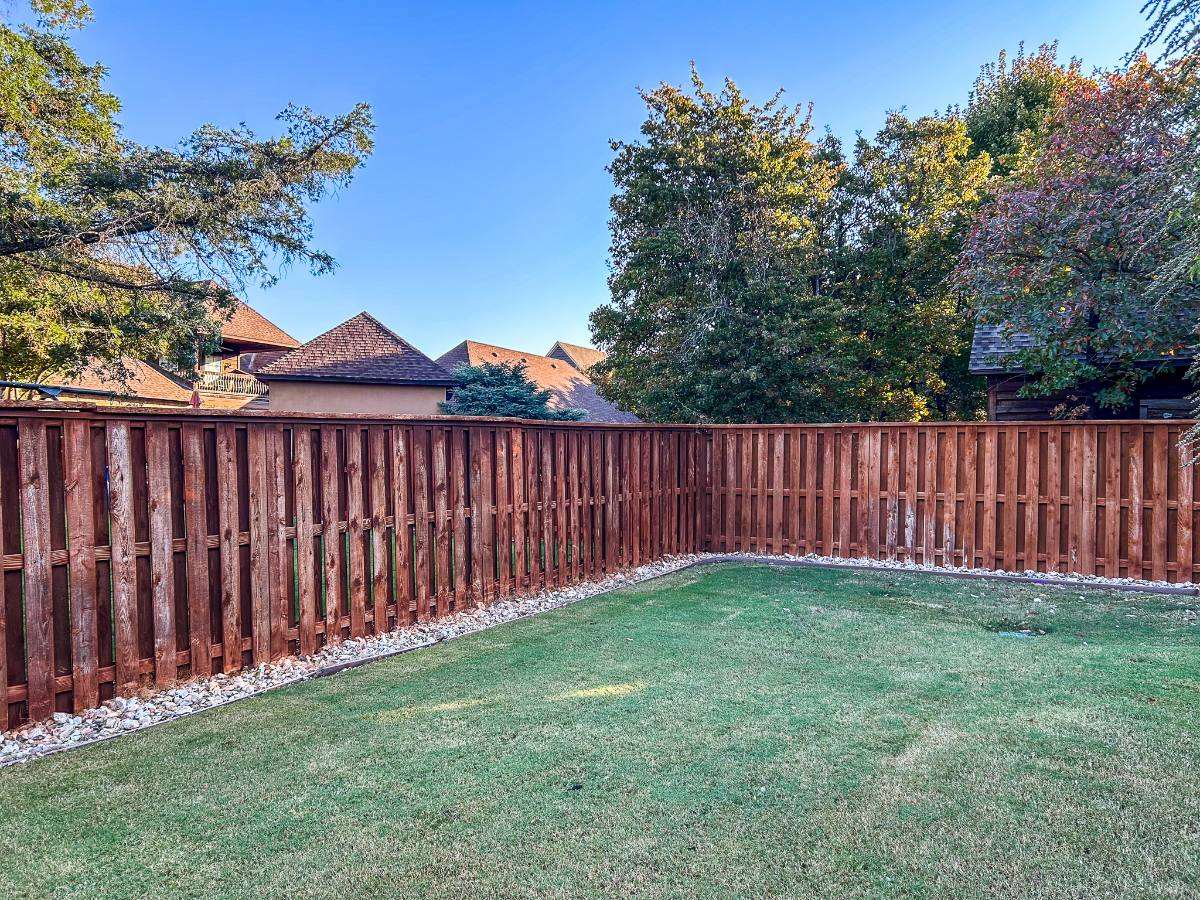
Before: years of UV gray and mildew.
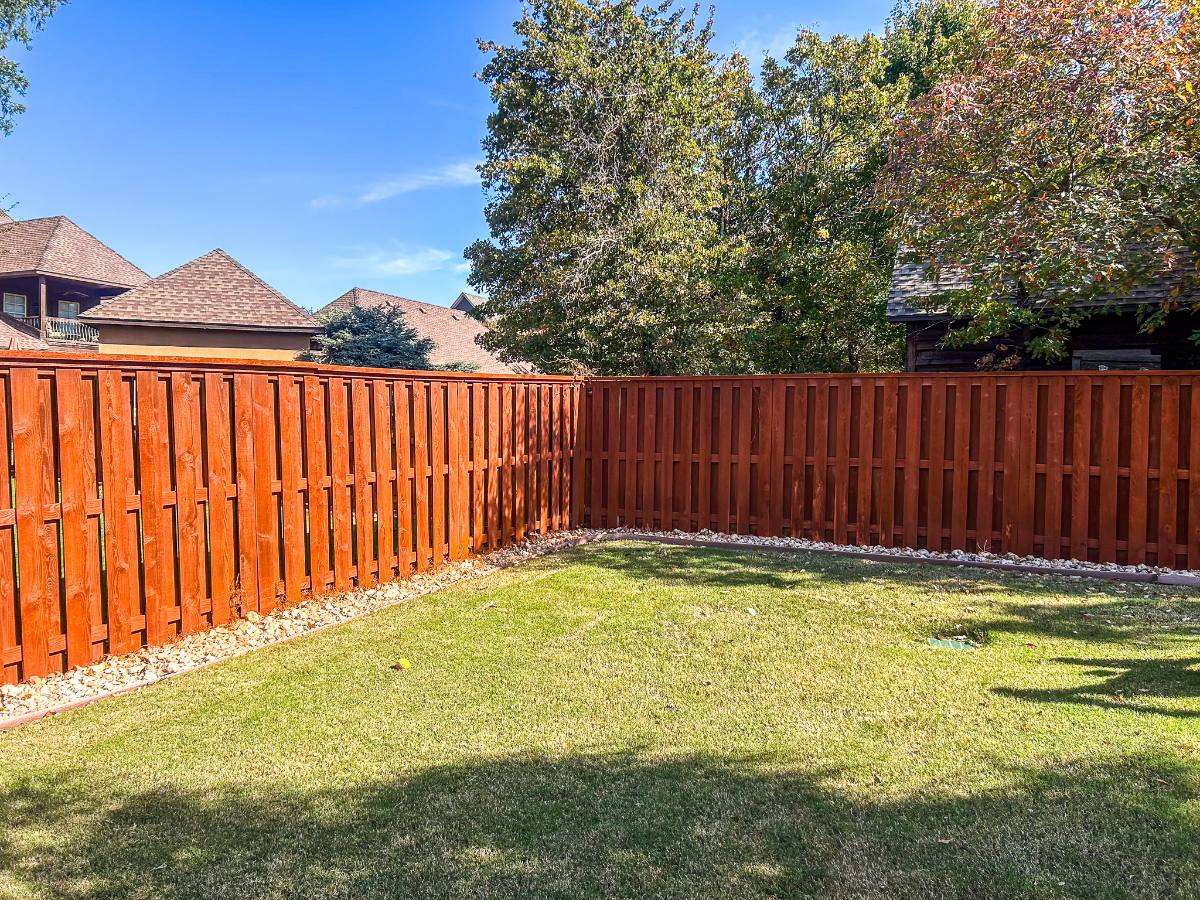
After: soft-washed, repaired and stained.
The sequence: assessment first, honest verdict second. Then any board and rail repairs, a soft-wash chemical cleaning — never pressure washing, which gouges softened cedar — full drying, and Expert Stain & Seal® penetrating oil applied to every board. Because the oil cures into the fiber, restoration work runs year-round in Oklahoma; there’s no film to fail in cold weather. From there, a 2–3 year recoat cycle keeps it protected — here’s how that schedule works.
When replacement really is the answer
Widespread post failure, structural rot through rails, or board loss approaching a third of the fence — at that point, restoration money is better spent on building properly once. When it is time to replace, build it right: heavy-duty steel posts, quality cedar, and a first stain at the correct moment so the new fence never goes through the gray cycle at all. Our fence installation work and when to stain a new fence cover both halves of that.
People also ask
Can a gray, weathered fence be restored?
Usually, yes. Gray is UV-damaged surface fiber, not structural failure. If the posts and rails are sound, soft-wash chemical cleaning lifts the oxidation and a penetrating oil stain brings the wood back — at a fraction of replacement cost.
How do I know if my fence posts are failing?
Push firmly on the fence at a post. More than an inch or two of sway, visible rot at the ground line, or panels leaning after storms all point to post failure — and staining a fence on failing posts is money spent on a fence that is already leaving.
Is it cheaper to restore or replace a fence?
Restoration — cleaning, minor repairs and staining — typically costs a fraction of full replacement. A new cedar privacy fence is a $15,000 to $50,000 project depending on size; restoration protects the structure you already own.
Can you replace a few boards and then stain?
Yes — swapping damaged boards and rails before staining is routine. New boards start lighter than weathered ones, and stain color choice helps blend them; the difference softens as the new wood ages.
How long will a restored fence last?
With sound posts and a 2-to-3-year recoat cycle of penetrating oil, a restored cedar fence routinely serves 10 to 15 more years — often doubling its remaining life versus leaving it gray.
Do you give an honest opinion if the fence isn't worth staining?
Yes. If posts or rails are failing, we say so before you spend a dollar. Not every weathered fence needs replacement, and not every fence should be stained — the assessment decides.
Free assessment
Not sure which side of the line your fence is on?
Send two photos and we’ll tell you honestly — restore, repair or replace — with a written quote for the right path. No deposit on staining under $10,000.