
Fence care guides · New fences
How long should you wait before staining a new fence?
Usually, you don’t have to wait at all. Most new cedar is kiln-dried and arrives ready to stain. What decides it isn’t the calendar — it’s a moisture meter. Below 18%, we stain. Above it, we wait for the wood, not the clock.
By the Patriot Fence & Stain team · Veteran-owned, 3,000,000+ sq ft stained since 2015 · Updated August 7, 2026 · 6 min read
Veteran-owned
BBB A+ since 2017
3M+ sq ft stained
$0 deposit on staining under $10K
The "wait a month" rule is outdated
The old advice — wait four weeks, six weeks, a season — comes from the green-lumber era, when fence boards shipped wet from the mill and needed weeks in the sun to dry out. That waiting period was never the point. It was a stand-in for the only thing that matters: moisture content inside the board.
Today, most cedar fencing is kiln-dried before it ever reaches the yard. The moisture is already out of it. A brand-new fence built from kiln-dried cedar is typically ready for stain the day the crew drives the last screw — and a moisture meter proves it in seconds, instead of guessing with a calendar.
18%: the number that decides
We test every fence with a moisture meter before staining — new or old, no exceptions. Below 18%, the fiber is open and the fence gets stained. Above 18% — usually after rain, or when a fence went up during a wet stretch — we hold, monitor the weather, and come back when the wood is ready. Penetrating oil needs open, dry fiber to soak into; stain applied over wet wood sits shallow, cures blotchy and wears early. The meter is how we make sure that never happens. Here’s the full testing process.
We don’t rush to failure
In a wet stretch, the critique we hear most is speed — homeowners want the fence stained now. We’d rather hear that than stain wet wood and watch the job fail early. When the meter says wait, we wait, and we make sure it’s done right.
Waiting months is the real mistake
If there’s no mandatory wait, there’s also no reason to let a new fence sit bare. UV graying starts within weeks of installation — the surface begins oxidizing long before it looks gray from the patio, and cedar’s natural oils evaporate steadily from day one. The first stain is the one applied to perfect wood: clean, open, never grayed. It soaks deepest, lasts longest, and costs the least. Let a new fence sit a year and that simple first stain becomes a cleaning-first restoration job. The cost guide shows the difference.
Both faces, any season
A new cedar privacy fence is a $15,000 to $50,000 asset. We protect it with Expert Stain & Seal® penetrating oil, applied to every board and sealed on both faces where accessible — balanced moisture movement is what keeps new boards from cupping and warping as they acclimate. And because the oil cures into the fiber rather than forming a film, we stain year-round in Oklahoma. A fence that passes the meter in December gets protected in December — it doesn’t spend a freeze-thaw winter drinking water while it waits for spring. What that moisture cycle does to bare wood.
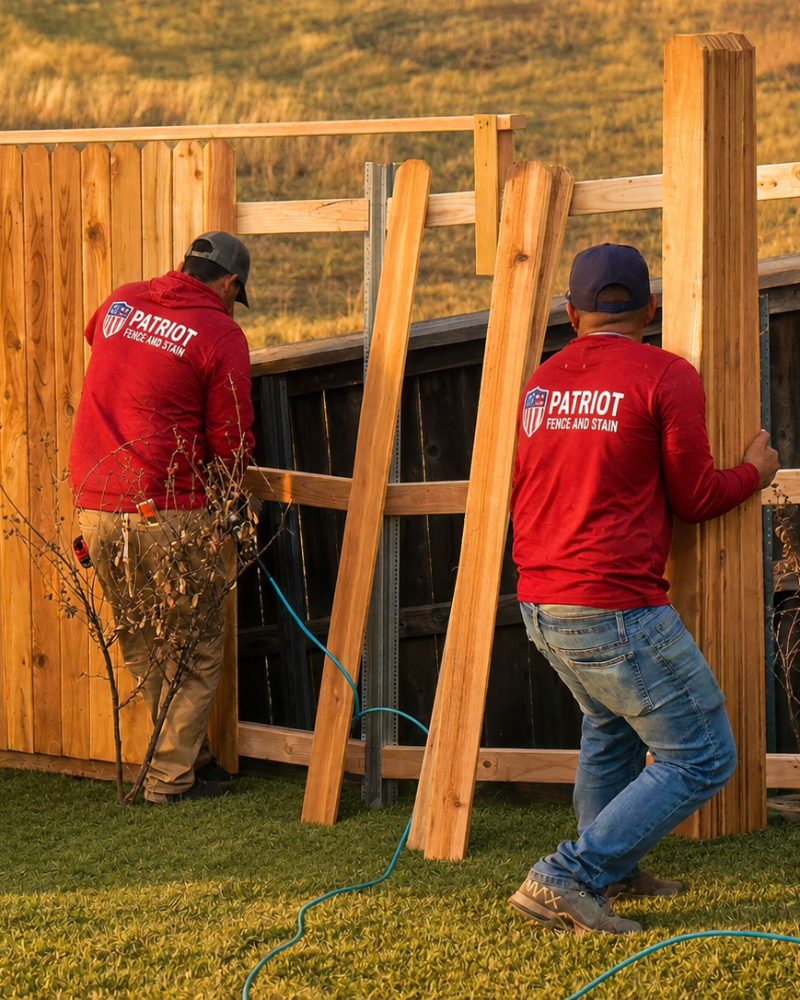
Kiln-dried cedar going up — usually stain-ready as soon as it’s built.
People also ask
How soon can you stain a brand new fence?
Usually immediately. Most new cedar is kiln-dried at the mill, so it arrives ready to accept stain. We confirm with a moisture meter on every fence — below 18%, we stain.
Do you have to wait 4 to 8 weeks to stain a new fence?
No — that advice dates from the green-lumber era, when boards arrived wet from the mill. The waiting period was always a stand-in for one thing: moisture content. A meter measures it directly, so kiln-dried cedar that reads below 18% can be stained right away.
What moisture level should wood be before staining?
Below 18%. At that level the wood fiber is open and penetrating oil soaks in and cures properly. We test every fence with a moisture meter before any stain goes on.
What if it rained right before my staining appointment?
Rain can push readings above 18%, and we won’t stain wet wood. We monitor the weather and return when the fence is ready. We don’t rush to failure — we make sure it’s done right.
Can a new fence be stained in winter?
Yes. Oil-based penetrating stains cure into the wood fiber rather than forming a film, so we stain year-round in Oklahoma. A fence installed in November doesn’t need to gray until spring.
Should you stain both sides of a new fence?
Where both faces are accessible, yes — sealing both sides balances moisture movement through the boards, which reduces cupping and warping as the new wood acclimates.
Free estimate
New fence? It's probably ready now
Send two photos and we’ll quote it in writing — then meter-test the wood before a drop of stain goes on. Year-round scheduling, no deposit on staining under $10,000.