
Restore
Weathered does not mean finished
Most gray fences in the Oklahoma City metro do not need replacing. They need soft-wash cleaning and a penetrating oil stain — usually for a fraction of what a new fence costs. We will tell you honestly which one you are looking at.
No deposit on staining jobs under $10,000 — pay only when you’re 100% satisfied.
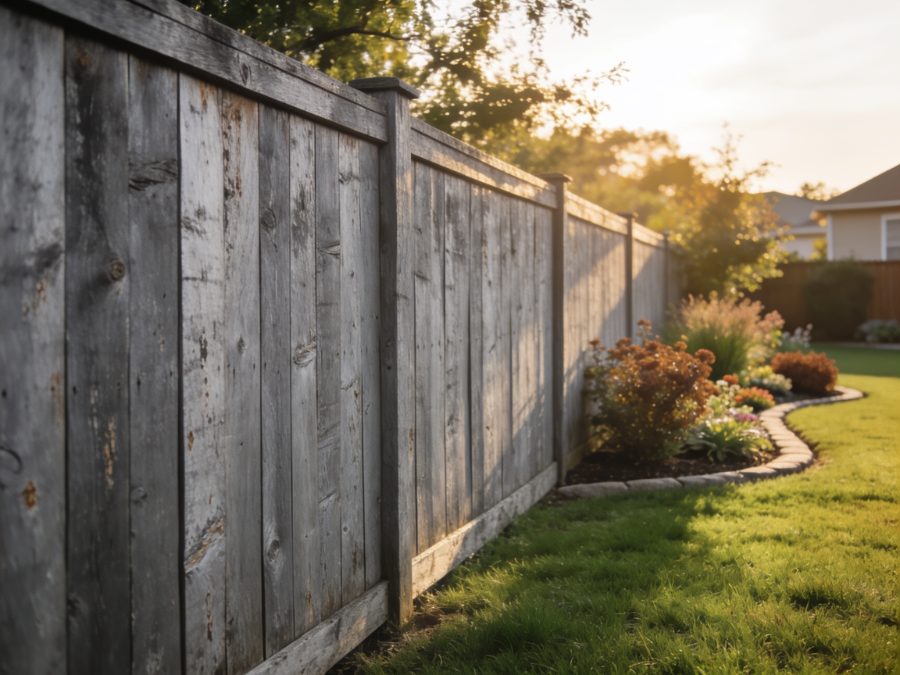
Before and after
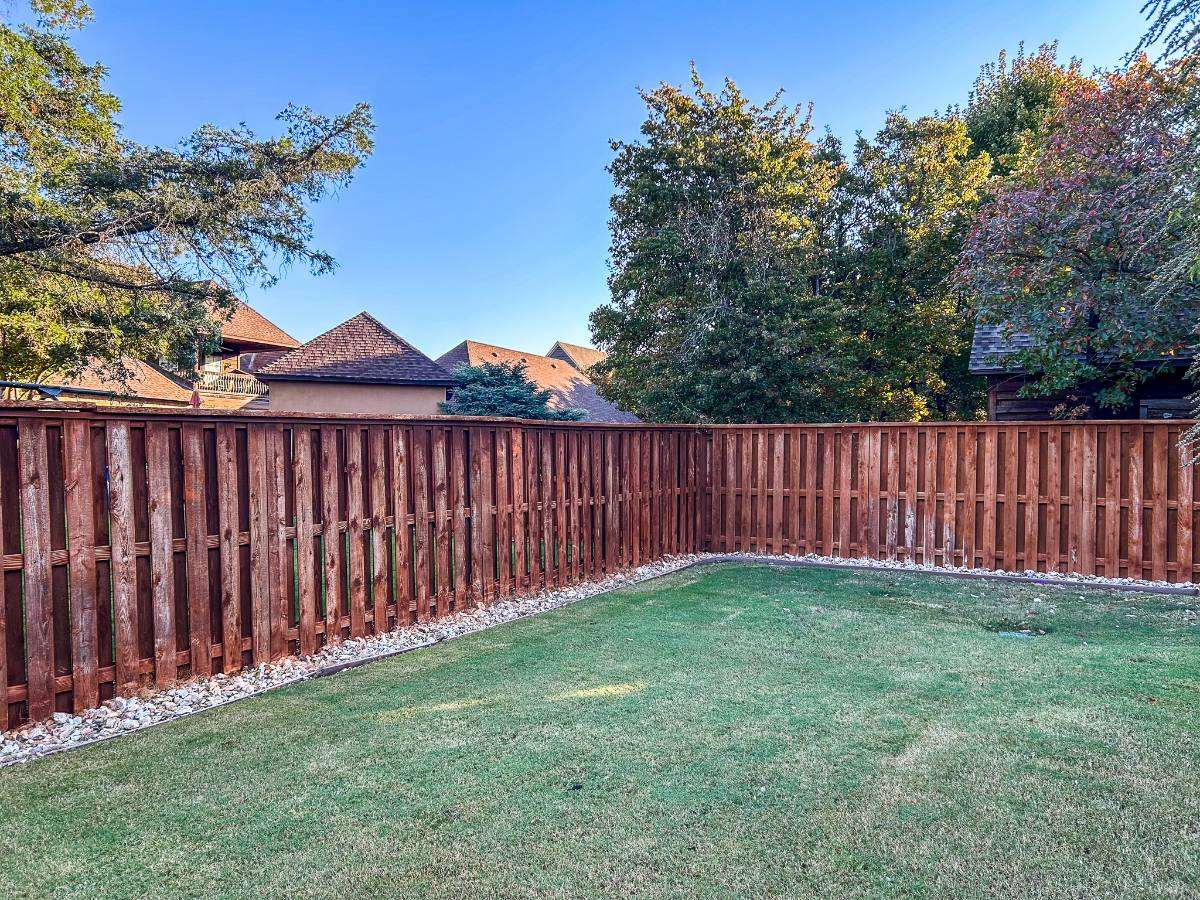
Same fence, same boards. No panels replaced. This is what soft-wash cleaning and penetrating oil actually do to gray cedar.
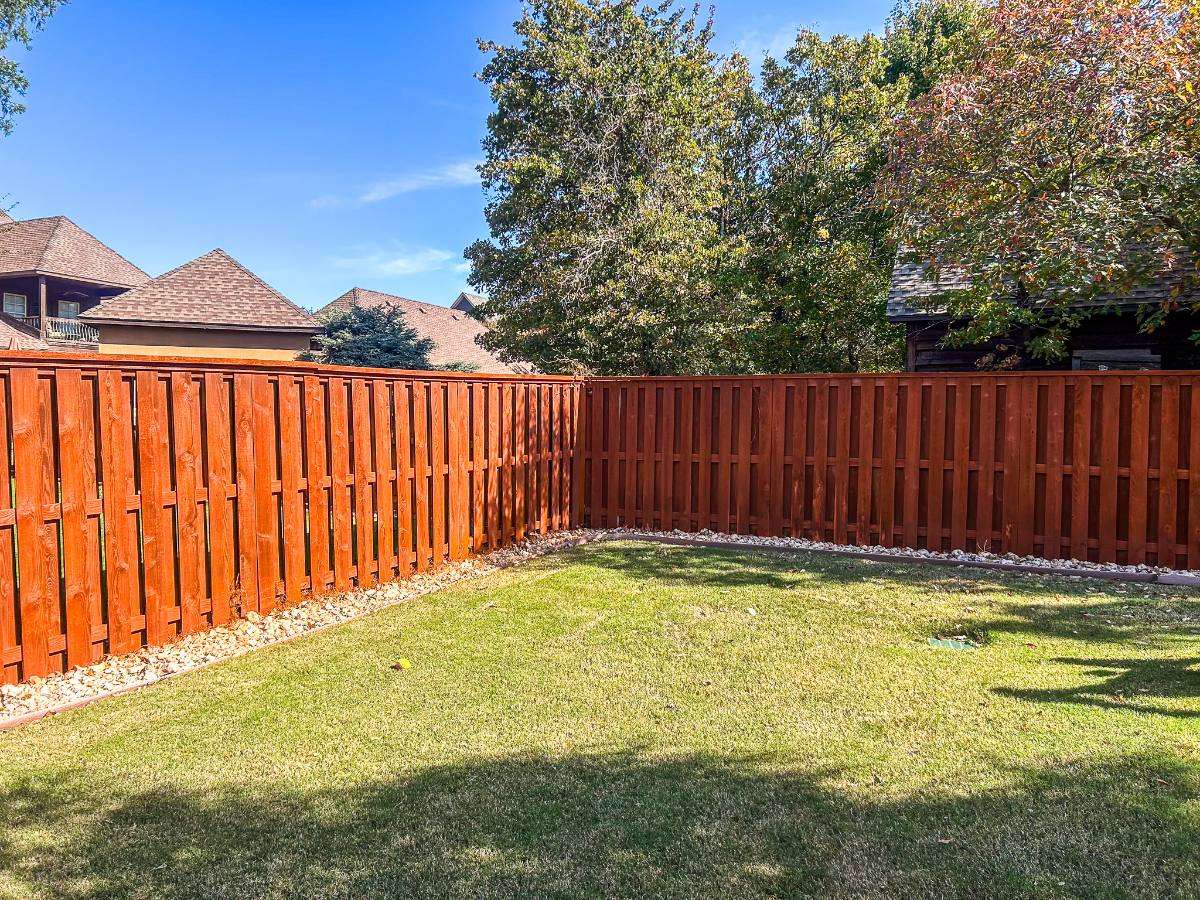
 BEFORE
AFTER
The process
How we bring a gray fence back
01
Assessment
We check posts, rails and boards first, and tell you honestly whether restoration or replacement is the right call.
02
Soft-wash clean
Chemical cleaning lifts gray oxidation, mildew and red clay. Never pressure washing — it gouges cedar.
03
Dry and test
The fence dries fully, then we test with a moisture meter. Below 18% we stain; above it, we wait for the weather.
04
Stain and seal
Expert Stain and Seal® penetrating oil, applied to every board, both faces. It is self-leveling, so it soaks in evenly without back-brushing.
The honest answer
When restoration is the wrong call
Gray is a finish problem. Structure is a different problem. If the posts are failing, staining is money spent on a fence that is already leaving — and we will say so rather than take the job.
—
Posts that move when you push the fence, or have rotted at the ground line
—
Rails pulling away from posts across multiple sections
—
Widespread rot you can push a screwdriver into, not just surface gray
—
A fence already leaning enough that panels no longer sit square
Any of those and we will walk you through replacement instead.
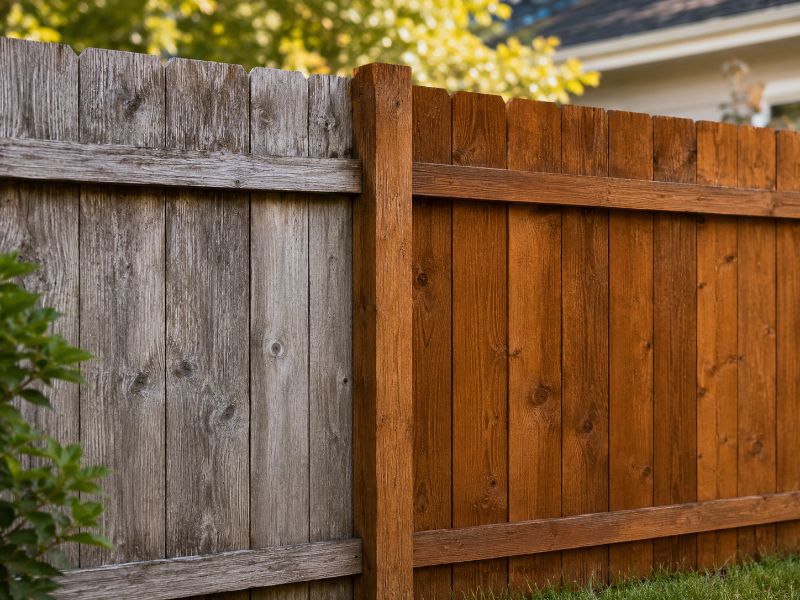
Rot and warping are structural. Gray is not.
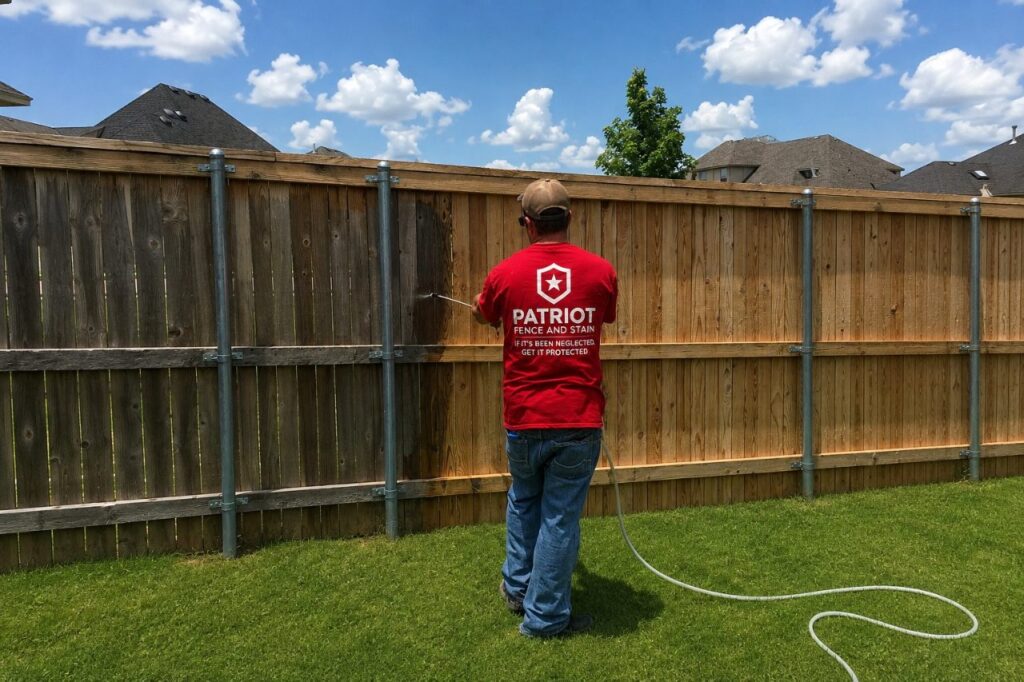
Soft-wash, never pressure washing
Pressure washing gouges cedar grain and leaves lap marks that show through the stain for years. Soft-wash chemical cleaning lifts gray oxidation, mildew and red clay chemically, without touching the wood fibre. It is the step that decides whether the finished fence looks restored or looks patched.
Then we let the fence dry fully and test it with a moisture meter. Below 18% we stain. Above it, we watch the weather and come back when the wood is ready.
“I thought my old gray fence was beyond repair but after Ian and his team came in they advised that the fence could be cleaned and stained to look new in no time. More importantly, cleaning and staining saved me thousands over a new fence.”
Lindsay Riddel
Google review · Fence restoration
Common questions
How much cheaper is restoration than replacement?
Substantially — cleaning and staining an existing fence is a fraction of the cost of tearing it out and building new. The exact figure depends on linear footage and condition, which is what the free quote is for.
Will a restored fence look patchy?
Not if the cleaning is done properly. Uneven results almost always come from pressure washing, which raises and gouges the grain so stain absorbs inconsistently. Soft-wash chemical cleaning avoids that.
Can you restore a fence that has been painted?
Not back to a natural penetrating-oil finish. Once paint is on cedar it cannot be removed thoroughly enough for oil stain to soak into the fiber. The realistic option is to recoat with a solid stain, also called a film-forming stain — we most often use and recommend Sherwin-Williams SuperDeck or WoodScapes. It covers the paint and evens the fence out, but it sits on the surface, so it needs maintaining rather than restaining.
How long does a restoration take?
Most residential fences are cleaned first, then given time to dry, usually 24 to 48 hours, before we schedule the staining based on weather and availability. We do not stain wet wood to keep a schedule.
How often will it need restaining?
Typically every three to five years in the Oklahoma City metro, depending on sun and weather exposure. Because the oil penetrates rather than forming a film, a restain refreshes it without stripping anything first.
Send two photos and we'll tell you which it is
Two wide shots and a close-up of the worst section is enough for us to tell restoration from replacement. We geo-map the fence line by satellite, so most quotes are back within a day without anyone needing to be home.