
Fence care guides · Protection
Does fence stain stop rot and warping?
Yes — by stopping what causes them. Rot, warping and cracking are all moisture problems, and a penetrating oil stain controls how moisture enters and leaves the wood. Here’s the mechanism, honestly including what stain can’t fix.
By the Patriot Fence & Stain team · Veteran-owned, 3,000,000+ sq ft stained since 2015 · Updated August 7, 2026 · 6 min read
Veteran-owned
BBB A+ since 2017
3M+ sq ft stained
$0 deposit on staining under $10K
Everything bad starts with the moisture cycle
Bare wood is a sponge. Rain, sprinklers and humidity soak in; sun and wind pull the water back out. Every cycle, the board swells and shrinks. In Oklahoma, freeze-thaw winters run that cycle dozens of times a season — and freezing water expands inside the grain, prying it open a little further each time. That’s where the three classic failures come from:
Cracking and checking — repeated swell-shrink opens splits along the grain, and every crack is a new door for more water.
Warping and cupping — when one face of a board gets wetter than the other, it curls toward the dry side. Fence boards, wet from one side by weather, cup predictably.
Rot and mold — wood-decay fungus activates when moisture stays high for sustained periods. Boards that stay damp — bottoms, shaded runs, anywhere film coatings trap water — feed it indefinitely.
What penetrating oil changes
Expert Stain & Seal® penetrating oil soaks into the wood fiber and cures there, doing three jobs at once: the oil makes the wood shed liquid water instead of drinking it; the pigment blocks the UV that breaks down surface fiber; and because there’s no surface film, vapor can still escape — the wood breathes. Moisture that does get in leaves as vapor instead of being trapped against the grain.
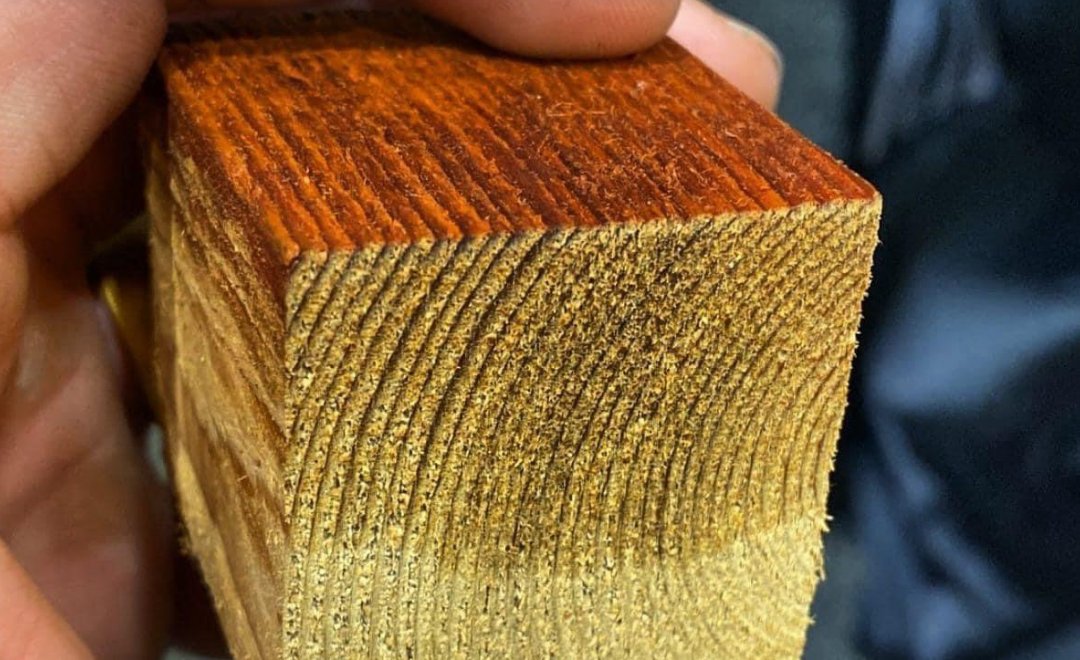
Protection cured into the grain — not sitting on top of it.
Contrast that with film-forming products, which trap moisture between the coating and the wood once they crack — actively feeding the rot they were supposed to prevent. That failure sequence is documented with photos on our film vs. oil page and in staining vs. painting.
The lifespan math
Unprotected cedar in Oklahoma commonly needs major repair inside 10–12 years. The same fence on a 2–3 year penetrating-oil cycle routinely serves 20–25. On a $15,000–$50,000 asset, staining is the difference between one fence in your ownership of the home and two.
What stain honestly can't do
Stain prevents. It doesn’t cure. Rot that already exists keeps its ground — rotted boards and rails need replacing before staining, and a post rotting below grade is a structural problem no coating reaches. Already-warped boards won’t flatten because they’re sealed. That’s why every job starts with an assessment: if the posts are failing, staining is money spent on a fence that’s already leaving, and we’ll say so. The restore-or-replace checklist is here.
One more timing note: protection compounds. Because oil-based stain applies year-round in Oklahoma, there’s no reason to let a fence run unprotected through a freeze-thaw winter waiting for spring — winter is precisely when the moisture cycle does its worst work.
People also ask
Does staining a fence prevent rot?
It dramatically slows it. Rot needs sustained moisture in the wood; penetrating oil stain repels liquid water while letting vapor escape, keeping boards below the moisture level fungus needs to grow.
Does stain stop a fence from warping?
It prevents most of it. Warping and cupping come from uneven moisture — one face wet, one dry. Sealing the boards, ideally both faces, evens out that moisture movement. Already-warped boards won’t flatten, but their neighbors are protected.
How much longer does a stained fence last?
An unprotected cedar fence in Oklahoma often needs major work in 10 to 12 years. Kept on a 2-to-3-year penetrating-oil cycle, the same fence routinely serves 20 to 25 — roughly double.
Why do fence boards crack and split?
Moisture cycling. Boards swell when wet and shrink when dry; Oklahoma’s freeze-thaw winters repeat that cycle dozens of times a season, opening checks and splits. Sealed wood cycles far less.
Can stain fix rot that already exists?
No. Stain prevents; it doesn’t cure. Rotted boards and posts need replacing first — then stain protects the repair and everything around it. If posts are failing, we’ll say staining isn’t the right spend.
Is sealing a fence the same as staining it?
A clear sealer repels water but carries little UV protection, so the wood still grays. A penetrating oil stain does both jobs — pigment blocks UV while the oil repels moisture — which is why stain-and-seal in one product is the standard.
Free estimate
Stop the moisture cycle before winter runs it again
Send two photos, skip the appointment. Year-round staining, no deposit on staining under $10,000 jobs — you pay when you’re 100% satisfied.