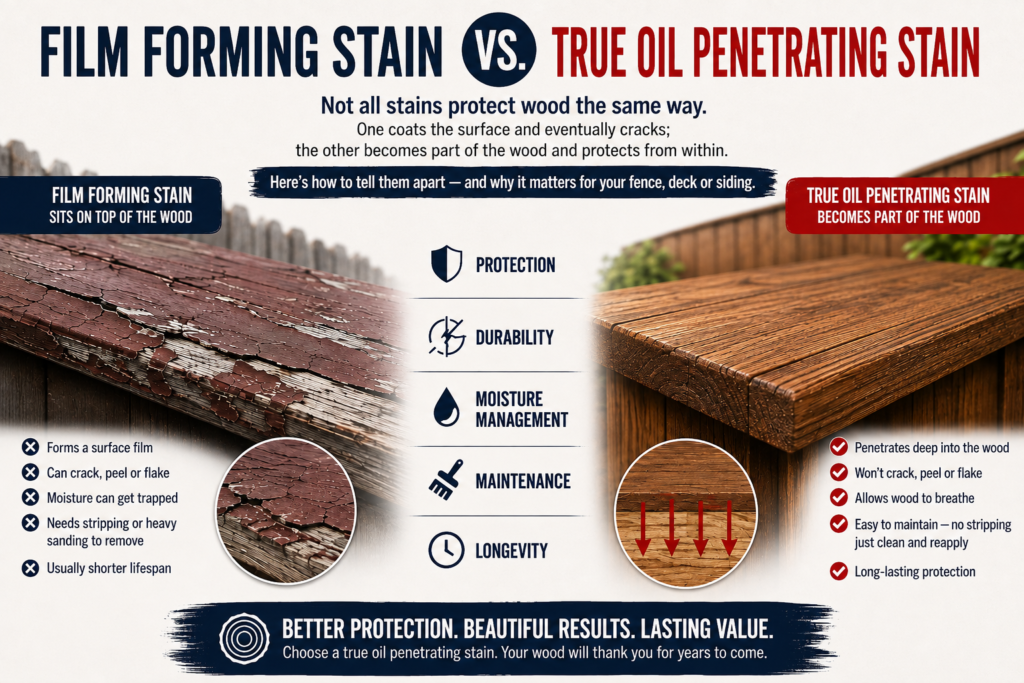
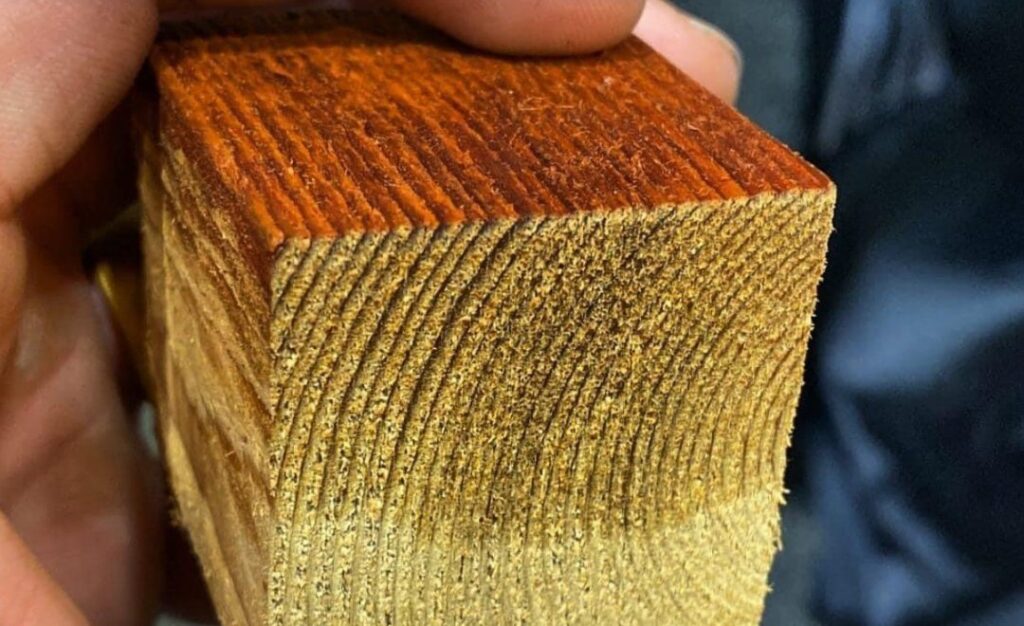
Not all stains protect wood the same way. One coats the surface and eventually cracks; the other becomes part of the wood and protects from within. Here’s how to tell them apart — and why it matters for your fence, deck or siding.
No deposit on staining jobs under $10,000 — pay only when you’re 100% satisfied.
Side by side: how each stain actually behaves
Every fence and wood-siding stain falls into one of these two categories. The mechanism decides everything else — how it looks, how long it lasts, and what it takes to maintain.
Mechanism
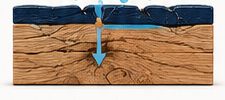
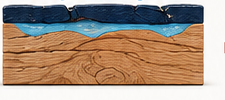
The difference between a film forming stain and a true oil penetrating stain comes down to mechanism. A film forming stain — the kind of surface-level coating found in many big-box deck and fence stains — forms a solid film on top of the wood rather than inside it. That film can look great in the first season, but it is bonded to the surface, not the fiber, so Oklahoma City’s freeze-thaw winters and summer UV exposure eventually crack, peel and blister it. A true oil penetrating stain, like the Expert Stain & Seal® we apply on every cedar fence, deck and wood siding project across the OKC metro, works the opposite way: it soaks deep into the wood fibers, nourishing and protecting the grain from within instead of sitting on top of it.
Appearance
That mechanism is also what decides appearance. Film forming stains look great at first, but because the film sits on top of the wood, it obscures the natural grain and telegraphs every crack as it ages — the tell-tale alligatoring homeowners in Edmond, Norman, Yukon, Mustang and Arcadia call us about every spring. A true penetrating oil stain enhances the natural beauty and grain of the wood instead of hiding it, so a cedar fence or deck stays translucent and rich rather than looking painted. That is the visual test our stain consultants use on every free estimate: if you can still see the wood grain through the color, it is penetrating oil; if it looks like a plastic coating, it is a film — and it is only a matter of time before it fails.
The common approach
Film forming stain
What we use
True oil penetrating stain
Lifespan
2 to 3 years — prone to peeling, cracking and flaking.
3 to 5+ years — ages beautifully with proper maintenance.
Maintenance
High maintenance — requires sanding or stripping to remove the old film before reapplication.
Low maintenance — easy to clean and recoat, no sanding or stripping needed.
Best use
Better for smooth surfaces like doors, trim or furniture.
Ideal for decks, siding, fences, outdoor furniture and all exterior wood.
☀
Pigment is sunscreen for the oil — the more pigment a stain carries, the slower UV breaks it down, and the longer both the color and the waterproofing underneath it last. It is a big reason true oil penetrating stains outlast film-forming ones.
What the mechanism looks like
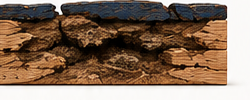
Freeze-thaw and UV do this to a film-forming stain
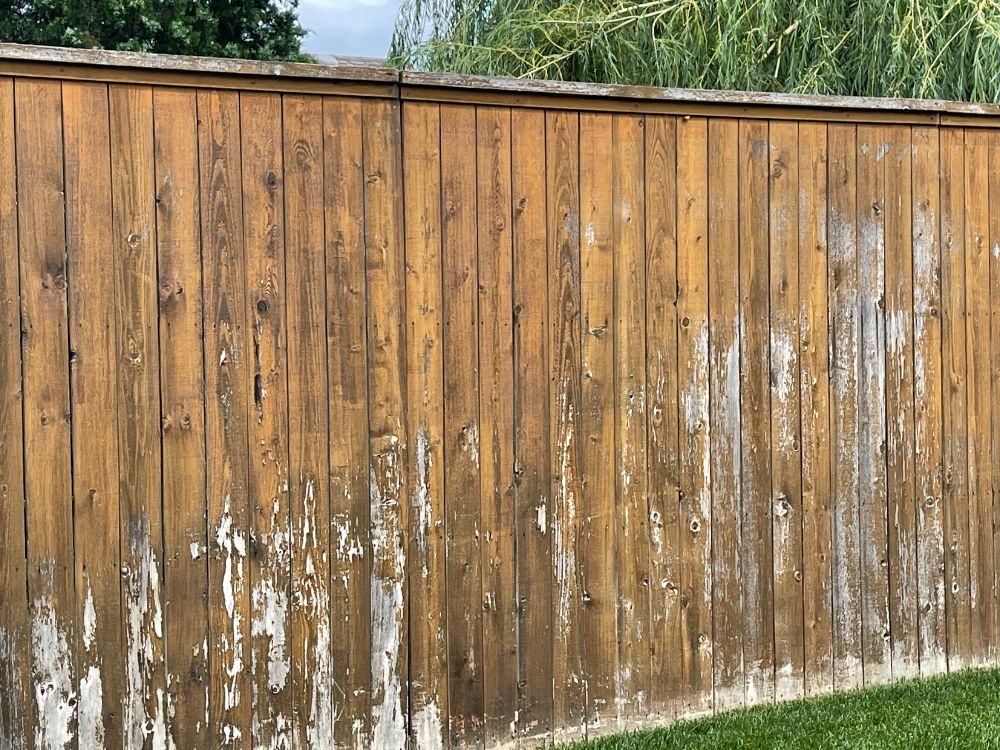
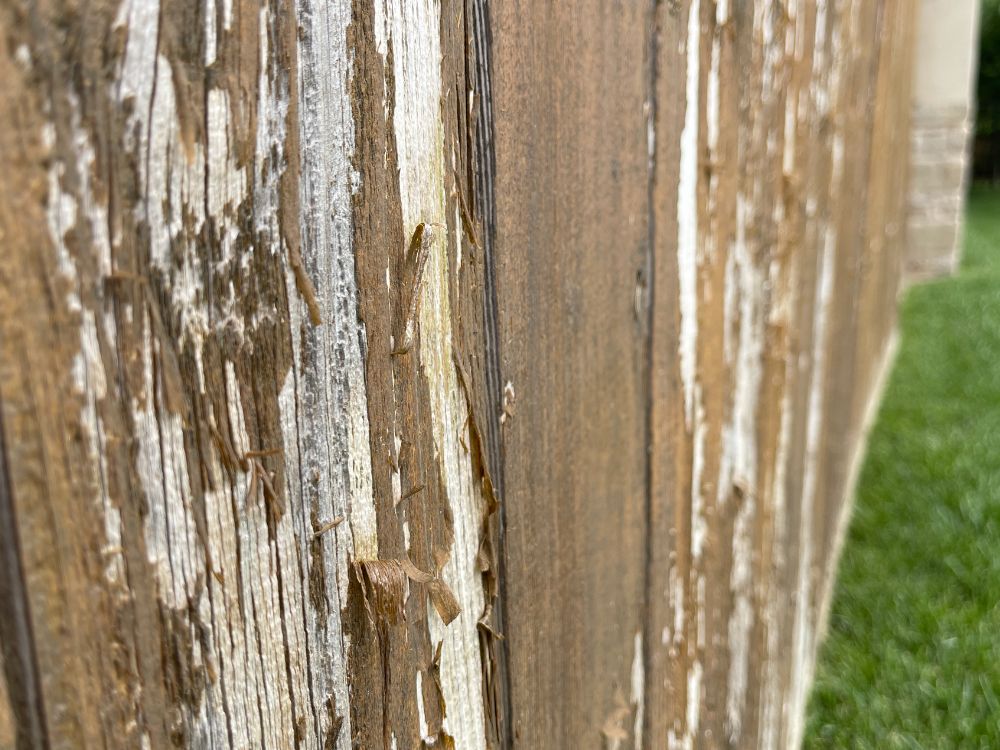
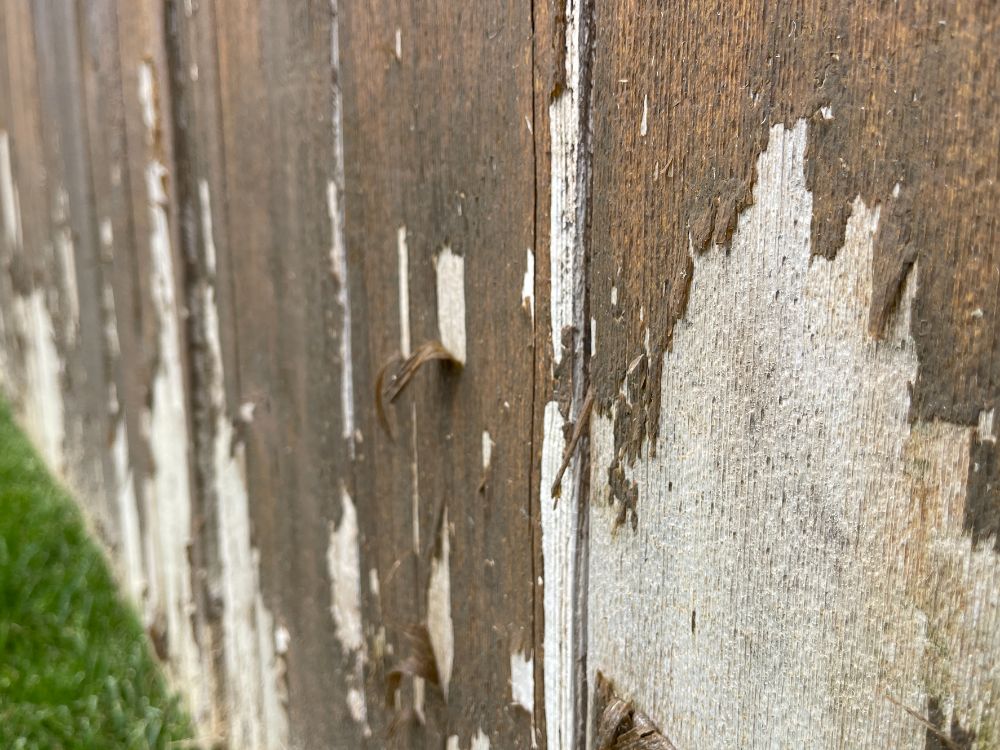
These photos are from a wood fence in the OKC metro finished with a film-forming, solid stain. The film lost its bond to the wood, cracked at the seams, and peeled away in sheets — exposing bare wood underneath. This is what “crack, peel and blister” actually looks like up close.
STAGE 1 — CRACKING
Cracking spreads across the panel
The film loses its bond over the whole surface, not just one high-wear board — this fence shows peeling across a dozen pickets at once.
STAGE 2 — LIFTING
Seams open and the film lifts
Once a crack opens, moisture works underneath the film and peels it back from the grain in long, curling strips.
STAGE 3 — BARE WOOD
It comes off in sheets, not dust
A film does not wear down evenly like a penetrating oil stain does. It curls away in sheets and leaves bare, unprotected wood behind.
Not sure what's on your fence right now?
Send two photos and we’ll tell you honestly — film-forming, penetrating oil, or bare wood — plus a written quote to protect it correctly.
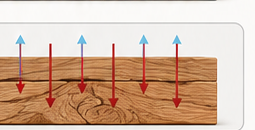
When film-forming stains crack, peel or blister, they trap moisture between the film and the wood. That hidden moisture can’t escape — leading to rot, mold and costly damage from the inside out.
1
Water gets in
Moisture seeps in through cracks or edges in the film.
2
Trapped moisture
The film acts like a barrier, trapping water against the wood.
3
Rot from within
Over time, trapped moisture causes decay, mold and rot inside the wood.
True oil penetrating stains let wood breathe
Oils penetrate deep, repelling water while allowing vapor to escape. No peeling, no trapping — just strong, healthy wood that lasts.
One stain, every exterior surface
Expert Stain & Seal® penetrating oil is ideal for decks, wood siding, fences, outdoor furniture and every exterior wood surface — the same protection, wherever your wood is exposed to Oklahoma weather.
Real performance — protection that lasts, penetrated deep into the grain.
Invest in the right protection
Enjoy beauty that lasts
Choose a true oil penetrating stain and give your wood the protection it was meant to have — ultra-low-VOC, kid- and pet-friendly, applied by a veteran-owned company BBB A+ since 2017.